

The Art and Heritage of Czech Glassmaking
Author: Magdalena Kořínková
Delicate decorative items made from fine glass, refracting sunlight as it passes through. The focused work of precise glassblowing and polishing of glasses, carafes, and vases—this is the art of glassmaking, where Czech glassmakers have excelled for centuries, raising the craft to an art form. Czech glass boasts a rich history and remains highly esteemed worldwide.
It Began with Glass
The oldest known glass artefacts originate from Egypt. Objects with a glass-like coating—now known as glaze—quickly spread around the world, reaching from Mesopotamia to India and eventually Europe. Knowledge and new techniques for crafting glassware grew over time, but a major breakthrough came with the invention of the glassblowing pipe. This enabled the production of hollow blown glass, a craft the Roman Empire took pride in. Glassmaking started to flourish significantly from the 13th century, marking the beginning of the history of Czech glass.
The Miracle of Crystal
The Renaissance was a time of cultural and educational revival, with a booming trade that also boosted Czech glassmaking. Skilled glassmakers from Saxony were often invited to share their expertise with Czech craftsmen, leading to the formation of notable glassmaking families, where the craft became a family heritage.
During Emperor Rudolf II's reign, engraver Caspar Lehmann became a prominent figure, establishing a Czech tradition of glass engraving. Though the Thirty Years' War temporarily slowed its progress, the Baroque era saw a significant advancement in the craft. With this new artistic movement, Czech glassmakers achieved perfectly clear glass, renowned for its purity and known today as Bohemian crystal, which soon gained worldwide acclaim.
A Craft as Heritage
By the early 18th century, Czech glassmakers had surpassed the skill of traditional masters—the Venetians. Czech crystal reached the height of fame during the Baroque period, dominating the luxury drinking glass market. Czech crystal’s ideal properties made it perfect for engraving and polishing. Double-walled goblets were especially popular, alongside mirrors and chandeliers, both symbols of luxury. The Art Nouveau period highlighted the talents of Czech artisans, who left their mark with brands like Moser, Riedel, and the renowned Harrachov glassworks.
Czech Glass in the 20th Century
Historical events had a major impact on Czech glassmaking. World wars and regime changes significantly affected the industry, leading to its decline. Under Communist rule, Czech glassworks were nationalised, and exports were managed under the Skloexport brand. Glass was seen as a viable export, so the Communists continued to support its production. However, the trend shifted towards automation, causing a decline in skilled manual craftsmanship.
In the 1990s, demand for decorative and luxury glass grew once more, bringing Czech glass back to prominence in the industry. Czech glassmakers now cover a significant part of the global market, particularly in jewellery production, renowned worldwide.
Owning a piece of Czech glass is not only prestigious but also a way to support the tradition of quality and timeless luxury, tested through the centuries.
Czech glass has been the global leader in glassmaking for centuries.
Related products
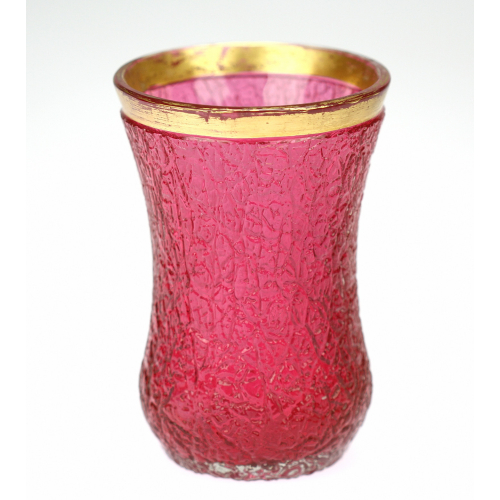
Ice glass beaker, 1850s - 1860s

Double walled glass with a gold foil, around 1730, Bohemia

Fish shaped glass vase, Bohemia, Harrachov

