
Kralik glassworks and the golden era of the Lenora glass factory
Author: Magdalena Kořínková
If you're not well-versed in the world of glass, terms like Kralik or Lenora might sound almost cryptic. But for glass enthusiasts, the name Wilhelm Kralik and the exquisite pieces from the Lenora glassworks represent luxury, sophistication, and an elegant lifestyle. Their delicate beauty hasn’t faded over time – not to mention their value!
We've previously discussed the centuries-old international recognition of Czech glassmaking companies in one of our previous articles. The craft of glassmaking earned its renowned reputation in Bohemia from the 13th century, with the tradition of glass engraving beginning here during the reign of Emperor Rudolf II. Czech glassmaking also became famous for its perfectly clear glass, still known today as Bohemian crystal. Czech glassworks are recognised worldwide, with Lenora being among the most renowned.
Meyr's Nephew
Wilhelm Kralik (born on December 17, 1806, in Kaltenbach, now Nové Hutě) was practically destined for glassmaking. His maternal grandfather was a mirror maker, his wife Anna’s father, Ferdinand Pihnak, was a glassmaking master, and her mother, Anna Meyr, was the sister of Johann Meyr, who operated the Adolf glassworks near Vimperk.
Johann Meyr played a pivotal role in Wilhelm Kralik’s life. Meyr was Kralik’s godfather and arranged for his entire education, choosing him as his successor.
After his studies, Wilhelm Kralik joined the Adolf glassworks, and upon Johann Meyr's death in 1841, he and Josef Taschek inherited the glassmaking complex Meyr had built. Just a year later, in spring 1862, Josef Taschek also passed away. Taschek’s share in the Lenora and Adolf glassworks was bequeathed to one of his sons, with the choice dependent on which son wished to pursue glassmaking. As neither son showed interest, Kralik bought their share, and he consolidated operations under the name “Meyr’s Neffe” (“Meyr’s Nephew”), managing the Lenora, Adolf, Nové Hutě, Františkov, and Arnoštov glassworks.

The Golden Era of the Lenora Glassworks
Under his leadership, unique Neo-Renaissance and iridescent glass pieces were produced, earning numerous awards, distinctions, and orders. Kralik was a recipient of the “Gold Cross of Merit with Crown,” the “Order of Franz Joseph,” and many others, and he was even elevated to Austrian knighthood with the title von Meyrswalden.
After Wilhelm Kralik's death (1877), his four sons took over the firm. Despite initial business challenges and a subsequent split of the company (1881) into the Lenora and Arnoštov glassworks, later registered under the name Wilhelm Kralik Sohn, they succeeded in growing the business and exporting their high-quality blown glass to many countries worldwide.
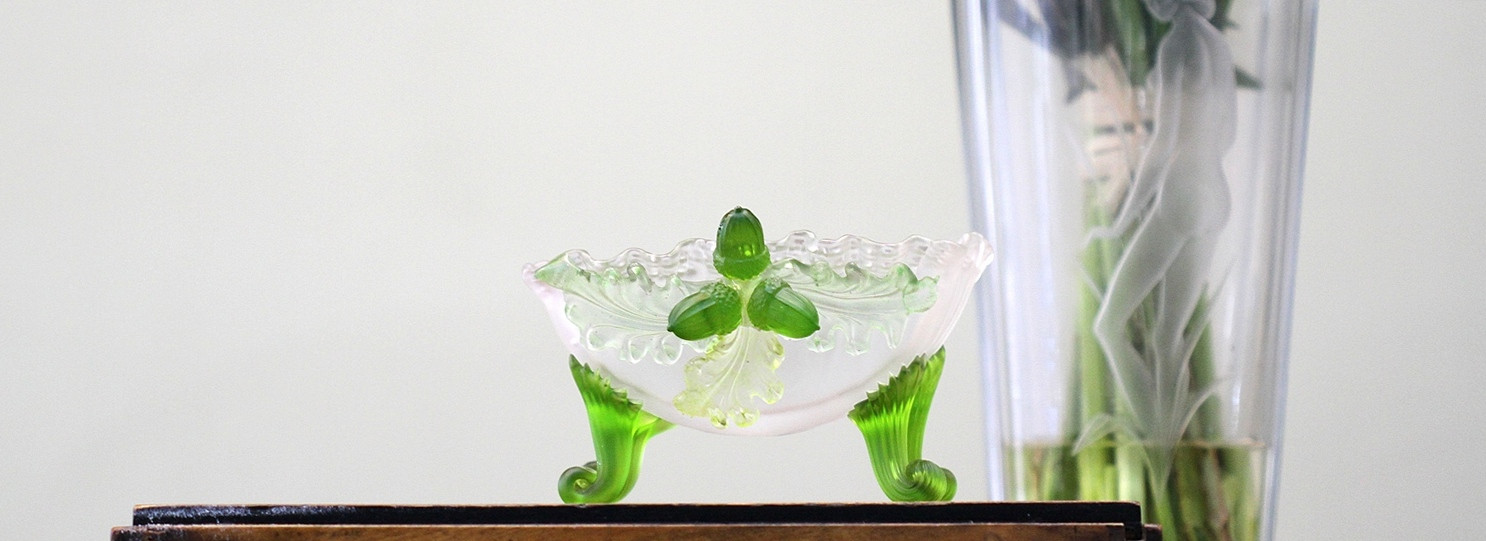
The glassworks included grinding, painting, and engraving workshops and employed around 500 people. By the late 19th century, the family business was experiencing its golden age. One of Lenora’s key features was its distinctive decorative style, making the firm’s products instantly recognisable. Notable symbols included flat pressed flowers with colour contrasts, petals, and tiny glass blossoms – these natural motifs are seen in nearly every decoration. A hallmark of Lenora glassworks products was clear glass that transitions to coloured glass in pastel shades, mainly green, turquoise, yellow, or pink.

Lenora Glass at Antiques Cinolter
At Antiques Cinolter, you’ll find beautiful pieces from the world-renowned Lenora glassworks, bringing a touch of refined elegance to your home. A stunning glass bowl decorated with green overlays in the shape of acorns and oak leaves or the amazing Art Nouveau vases carry stories of those who once placed jewellery, treats, or flowers gifted by loved ones in them. Join those who continue to cherish these unique antique treasures and bring their stories to life.
