Natural materials and antique jewellery
Author: Magdalena Kořínková
Before people started crafting jewellery from metals, they mostly used natural materials for decoration. Among those that have been preserved, we can mention, for example, over 100 thousand years old crafted shells. Later on, precious stones were used to decorate jewellery, but the popularity of natural materials did not disappear. Pearls, coral and amber were highly prized and are still widely used today. Let us take you through the natural materials that can be found in jewellery nowadays.
Bones, teeth and horns
Bone jewellery was probably some of the first ever men made. Bones were abundant everywhere, relatively soft and easy to work, so making objects out of bone was not too difficult. While you won't find bone-embellished jewelry here at Antiques Cinolter (at the moment), we do have an amazing collection of skeleton statues and skulls made from polished bones. Perfect for lovers of the Mexican holiday Día de los Muertos.
Horns were used to make brooches, buttons and pendants. In the past, deer dropped a lot of antlers - by comparison, even today, around 200 kg of antlers are dropped by deer every year.
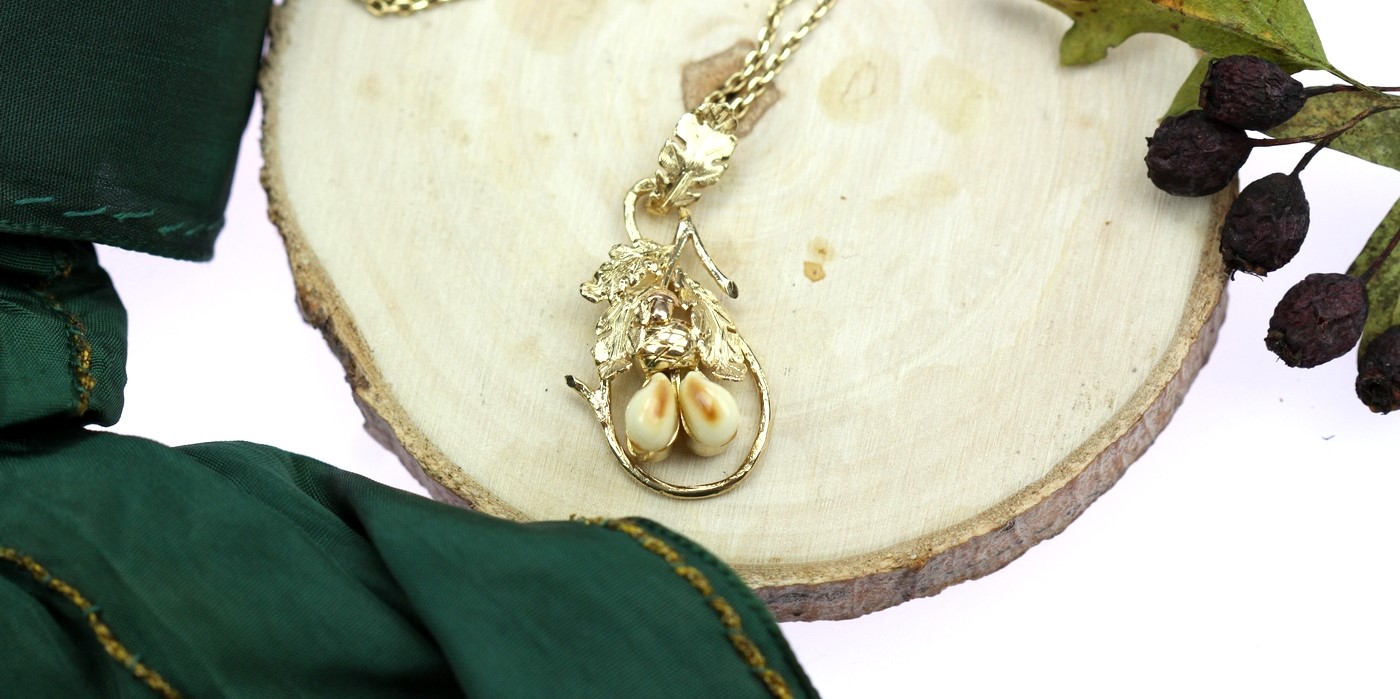
Grandel jewellery is often decorated with embossed oak leaves and green gems. Their popularity was greatest from the 19th century to the first third of the 20th century, so the most beautiful ones can be found in antique stores.
Pearls
All it takes is a grain of sand or other dirt to enter the shell of a pearlfish, pearlworm or oyster and a defence reaction is triggered. This causes the creature to produce a pearly substance that coats the foreign body. But it takes at least a year before the dirt becomes pearl.
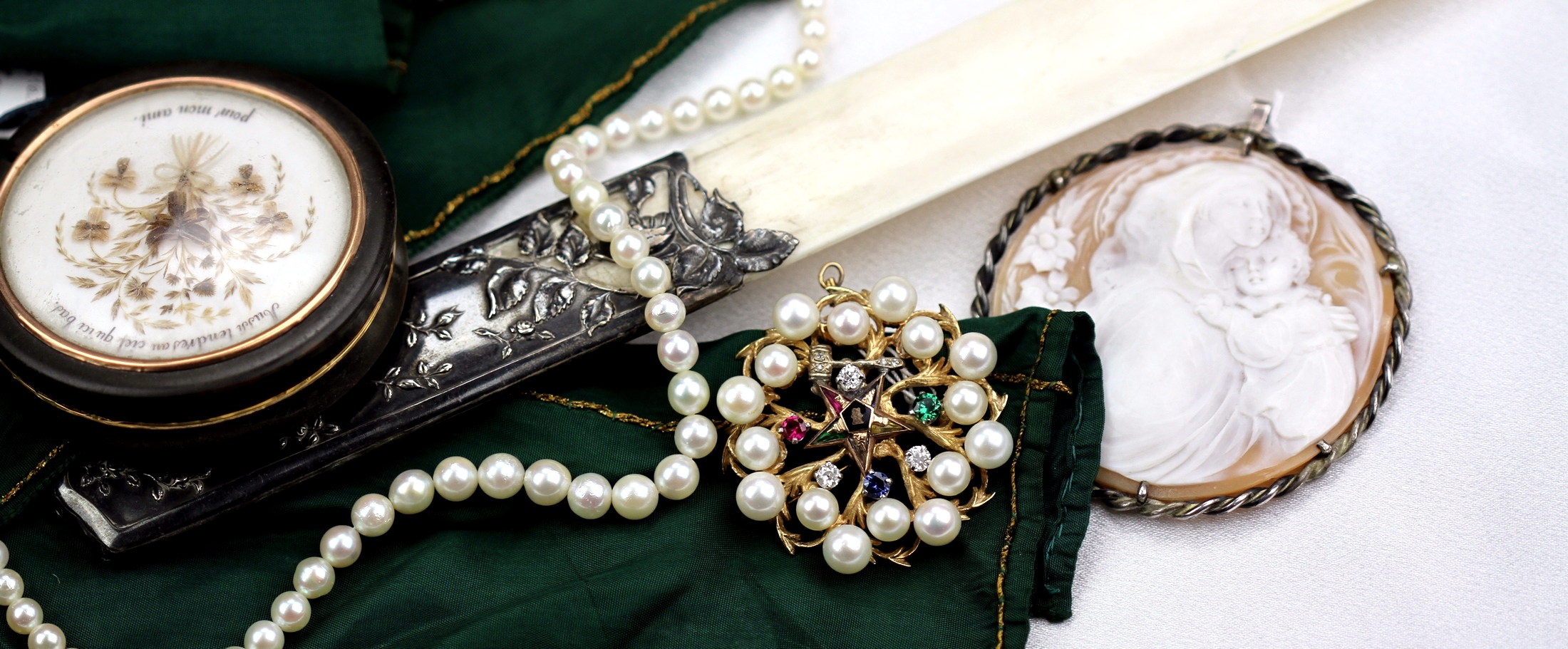
Pearls can be obtained from both saltwater and freshwater bivalves. Freshwater pearls are smaller than saltwater pearls, and have been widely used to decorate antique jewelry. Although when we say pearl, we think of a perfect ball of white, the colour range of pearls is wide: from pink to black. Most natural pearls are irregularly shaped. Perfectly round and smooth pearls usually come from farms where a foreign object is artificially inserted into the shell - these are called cultured pearls. Among the rarest, finest and most popular are akoya pearls from southern Japan. The secret of their cultivation was discovered by Kokichi Mikimoto at the end of the 19th century.
Sea coral
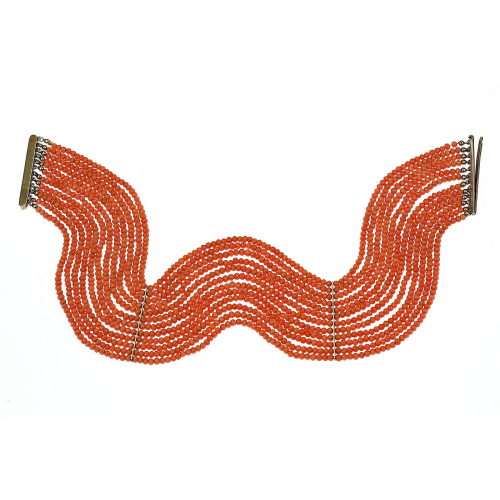
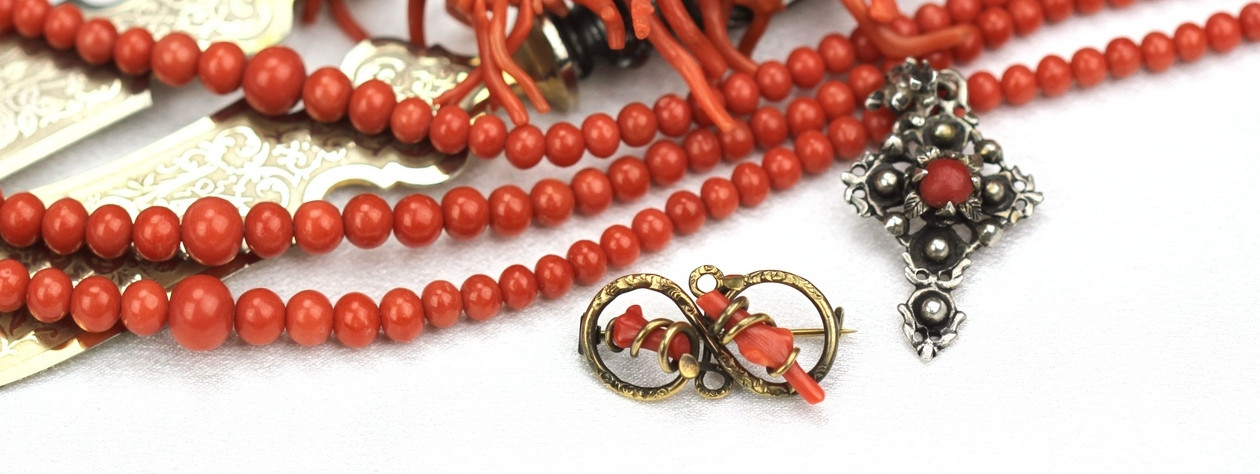
The hard outer shells of some species of coral have been used in jewellery since prehistoric times - it was believed to be a gift from the gods, protecting the wearer from all adverse influences. Thanks to their beautiful colouring in different shades of red, corals were used to make necklaces, bracelets, rings and earrings. Nowadays, coral mining is considered controversial from an ethical and environmental point of view. One cannot disagree with the protection of nature and precious corals, so if you want to adorn yourself with their beauty, an alternative is to acquire an antique coral jewellery. 
Amber
Although it is not a stone in the true sense of the word, it is classified as a mineral. It is most commonly found in honey yellow, but comes in eight other colour variations (orange, red, white, brown, rare blue-green, black or moss). Inside amber we can find preserved insects, plant parts, but also much larger messengers of the past - from lizards to birds to dinosaur parts. This makes amber not only aesthetic but also paleontological significance.
In the past we have written a separate article about amber, also known as the "gold of the north", which is definitely worth reading. 
Ivory
It was used as early as the Stone Age, mainly for making jewellery and ornaments. It has remained popular for many centuries, and in addition to jewellery, it was also used to make figurines, buttons, billiard balls and the surface of keyboards for pianos.
Since 19 January 2022, the EU has tightened the conditions for international and intra-EU trade in ivory, and the trade in older ivory is now completely banned. Previously, antiques processed before 1947 were exempt from the ban, but this is no longer the case and imports and re-exports are suspended. Individual rules can be found in the law if you are interested, but in general the trade in ivory, even in the form of antiques, is now completely prohibited.
Tortoiseshell
The honey-coloured, dark red or brown speckled tortoiseshell was obtained from the upper shell of the sea turtle. It was easily processed and polished, and was therefore popular for inlaying furniture, decorating small objects such as cabinets, cigarette cases, powder boxes or other cases, as well as for making eyeglass frames, clasps or combs. Today, the trade in tortoiseshell is banned, and the sea turtle is protected by the Washington Convention.
Under the protection of CITIES
CITIES (Convention on International Trade in Endangered Species of Wild Fauna and Flora) is the acronym for the Washington Convention. This Convention on International Trade in Endangered Species of Wild Fauna and Flora is responsible for controlling the global trade in more than just ivory or tortoiseshell. The treaty came into effect in July 1975, and today almost 200 countries are signatories (the Czech Republic as of 28 May 1992, still as Czechoslovakia).
Antiques Cinolter Code of Ethics
Antiques are a "probe into history" and so must be seen in the context of the time, technique and tradition in which the object was created. Therefore, we would like to conclude by noting that we agree that nature must be protected unconditionally, and so we never offer modern objects in our shop whose manufacture would go against any ethical codes.
Related products
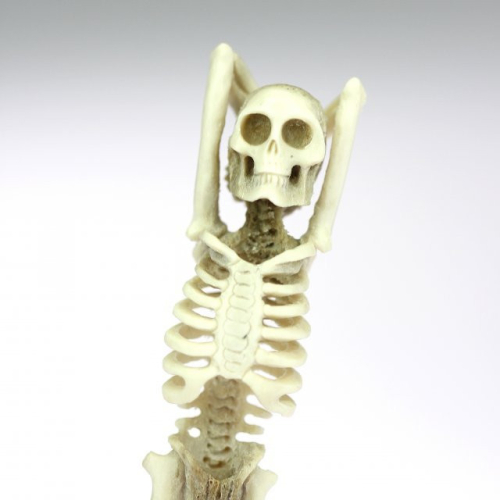
Figure of a skeleton