

The Timeless Beauty of Floral Motifs in Jewellery and Antiques
Author: Magdalena Kořínková
Summer is the time when we head out into nature to enjoy the sunshine and the beauty of blooming and greening trees, parks, and gardens, filled with fragrance and vibrant colours. It’s no wonder people wanted to preserve this beauty all year round. They built winter gardens and surrounded themselves with paintings, porcelain, and jewellery with floral motifs. Let’s take a look back into history to see how floral decoration evolved.
Timeless Flowers
In ancient Egypt, floral collars were especially popular. Initially made from natural leaves and flowers, which unfortunately withered and fell apart, they gradually evolved into golden leaves and flowers adorned with turquoise, carnelians, or enamels. A stunning example is a floral collar made from dried plants, papyrus, and faience beads found in Tutankhamun’s tomb.
Golden Bees
In Greece, too, beautiful jewellery featuring motifs of leaves, flowers, or depictions of animals or insects was discovered, predominantly from the Minoan culture. If you plan to visit Crete in the future, we highly recommend a trip to the Heraklion Archaeological Museum to admire the magnificent Malia Bees pendant.
A Badge of Wealth and Nobility
In ancient times, diadems were also a widely popular ornament. They were most often decorated with floral and anthropomorphic motifs, such as roses or bellflowers, branches with delicate tendrils, or oak leaves and acorns. Why oaks? Because in ancient Greece, oaks were associated with the idea of immortality. All of this splendour was crafted most often from gold and decorated with enamels, carnelians, or amethysts.
Gems Take Centre Stage
Many centuries later, the love for jewellery with natural motifs had not faded. In the 17th century, golden or silver wreaths adorned with pearls and gemstones, especially rubies and emeralds, were highly fashionable. During the Renaissance, the popularity of diamonds surged due to new discoveries.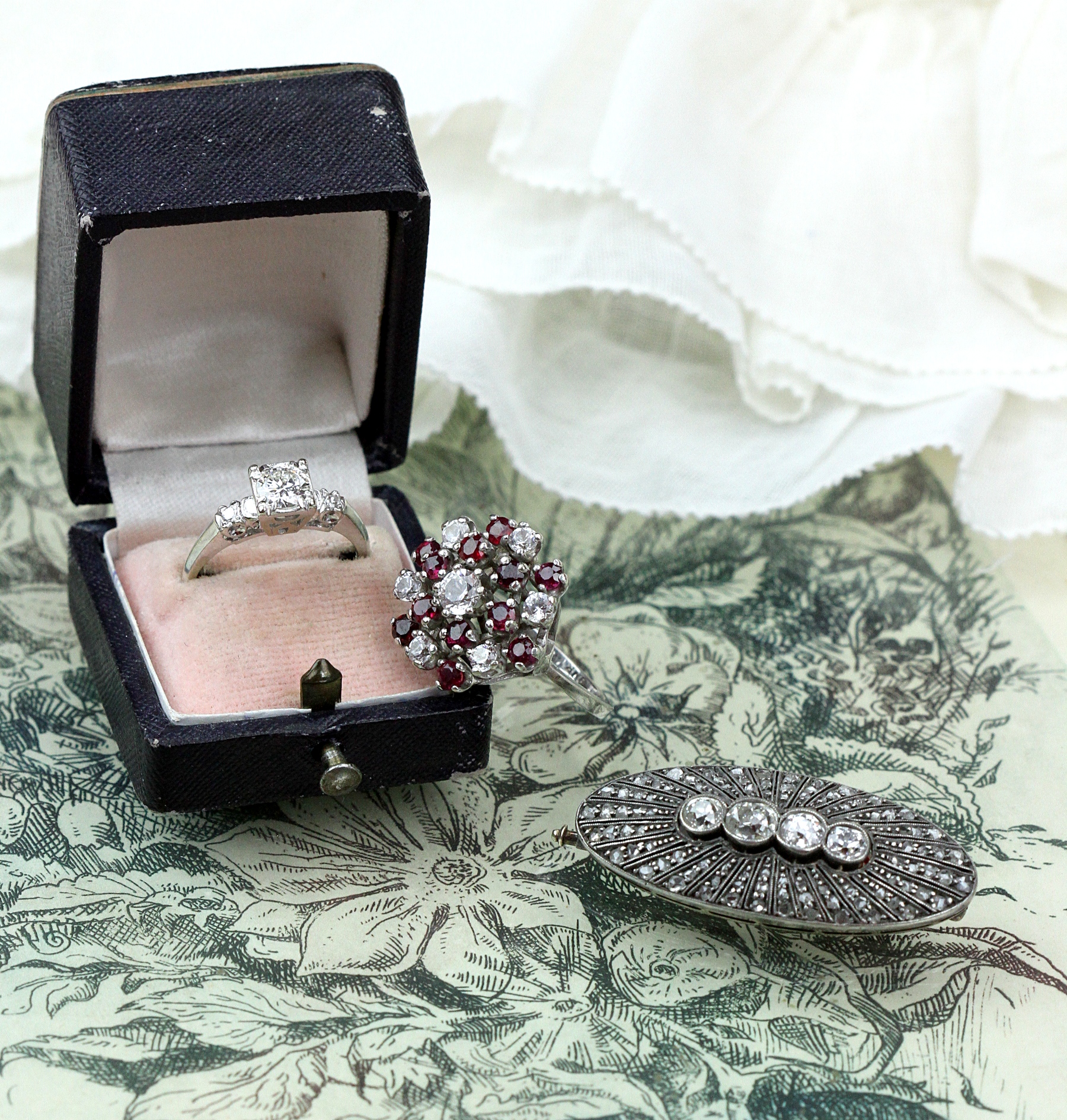
A Flower Pricier Than a Gemstone
What was worth more than gold or even entire townhouses in the 16th and 17th centuries? Tulips. In the 16th century, Turkish Sultan Suleiman I fell in love with tulips and had them planted all over Istanbul. Thanks to an ambassador from the Austrian court, they made their way to Europe. It might surprise you to know that the first tulips in Europe bloomed in 1554 in the royal gardens of Prague.
The Great Tulip Theft
In Vienna, the French-Dutch botanist Carolus Clusius founded the first Dutch tulip school, dedicating himself to tulips for their potential medical uses. Tulips, however, were extremely rare at the time, and their bulbs were worth their weight in gold. How, then, did they spread across Holland? Thank thieves who stole Clusius’ tulip collections directly from his garden.
Even this didn’t devalue them – at the time, a single bulb cost as much as a townhouse in Amsterdam. The situation became unsustainable, and in 1637, after more than 80 years, the tulip market collapsed.
Flowers on Canvas
Thanks to the "tulip mania," we can still admire paintings by Rembrandt and other Golden Age artists, particularly those depicting beautiful white tulips with red streaks. Painters also immortalised other flowers on canvas – especially hyacinths, lilies, roses, and sunflowers, as well as much more exotic blooms.
Porcelain and Decorative Arts
Where do we most often find floral motifs? In decorative arts. They adorn vases, bowls, and plates, but also cutlery, glasses, jugs, and goblets. These motifs are strongly incorporated not only in castle collections and wealthy burgher residences but also in folk art. That’s why you’ll often find painted porcelain plates or jugs in old cottages that can hold significant value today. If you own such a cottage, you might discover a valuable treasure from the attic.
Shimmering Insects, Deer Teeth, and Grapes
Centuries passed, yet floral motifs remained popular and continue to do so. This was also true during the Art Nouveau period, when ornamentation became a significant element of architecture and art, inspired by nature. Artists from all fields drew inspiration from flowers, vines, tendrils, grapes, leaves, as well as dragonflies, butterflies, beetles, and other colourful and shimmering insects. These were perfectly suited for artistic and jewellery designs with their intricate forms and vivid colours.
Still Blooming Today
Flowers, leaves, tendrils, and other natural motifs continue to adorn us even today. Major jewellery brands create entire collections centred on this theme. Examples include Tiffany Paper Flowers, Tiffany Save the Wild, Cartier Fauna and Flora, Panthére de Cartier, and from local brands, ALO Blossoms, Animals, Essential, Flowers, or Garden of Dreams.
However, we recommend investing in antique jewellery. Its value is not only enhanced by the materials used but also by its high antique craftsmanship. After all, few artisans today can handcraft jewellery with the same perfection as the master goldsmiths of the past, not to mention the brilliance of older gem cuts.
