
Scarlet jewellery
Author: Magdalena Kořínková
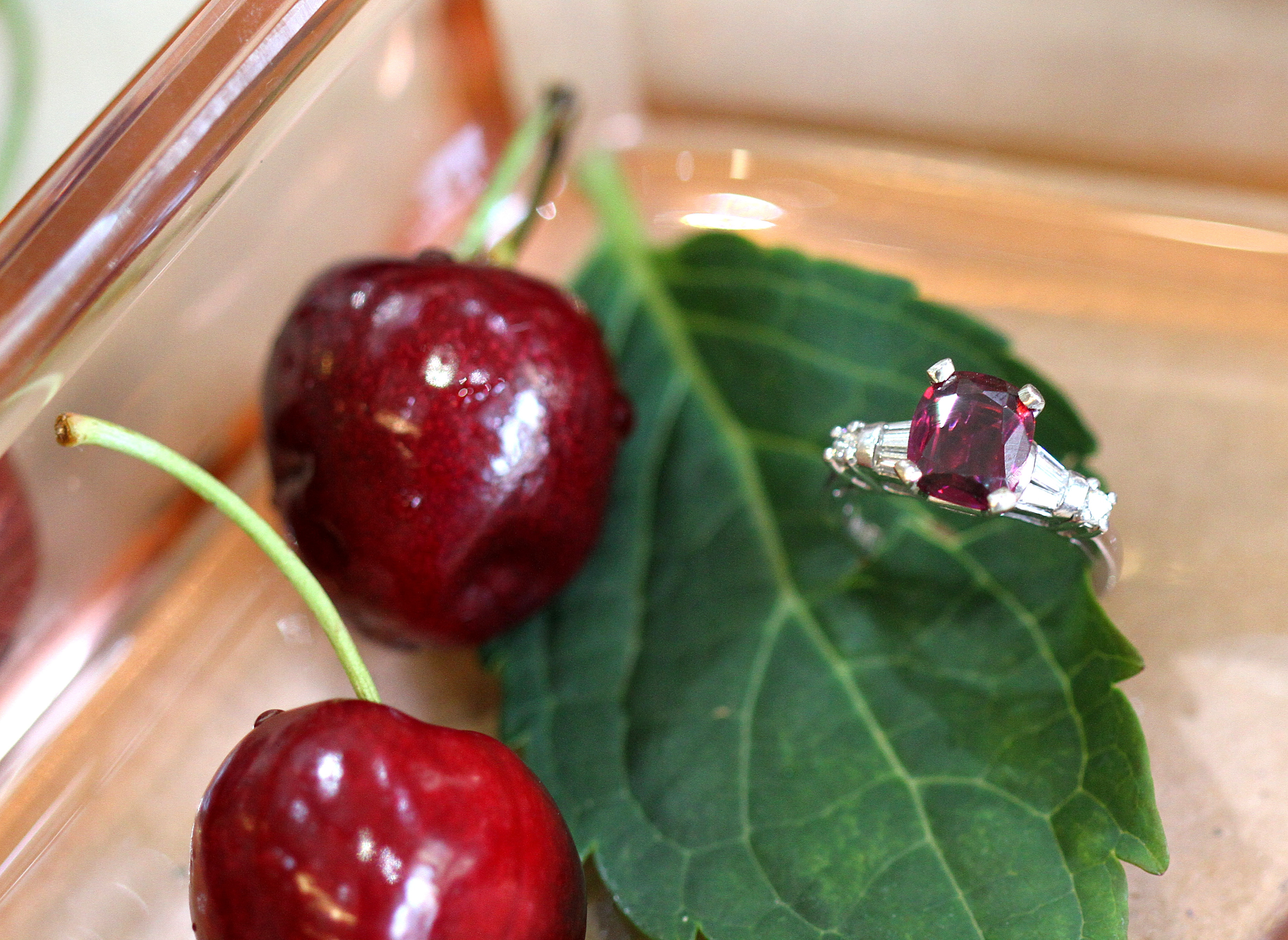
Which other gemstone could better represent the month of June than the splendidly red ruby? It is among the most precious gemstones, with a value that can surpass even that of a diamond. However, in honour of June, we won’t focus solely on rubies. Let’s also take a closer look at other red-hued gemstones.
The vivid colour, ranging from pink to deep red, is stimulating and symbolises vitality, strength, courage, and joy. Rubies, Czech garnets, diamonds, as well as tourmalines (the red variety is called rubellite), opals, jaspers, agates, beryls, carnelians, or topazes are among the stunningly beautiful, remarkably valuable, and prestigious gemstones.
Whether you desire a red gemstone as an investment commodity, or simply wish to bring joy to yourself or others, we can advise you on which stone to choose, what to focus on, and what questions to ask.

Diamonds
Red-coloured diamonds are truly rare. Although diamonds occur in 12 colour varieties that can appear in various combinations, only a few dozen red diamonds are known to exist. It is no wonder that their price is extremely high, with a carat of red diamond valued at approximately $1 million!
Interestingly, the exact cause of the red colour is still unknown, although it is believed to result from deformation in the crystal lattice: the greater the deformation, the more intense the colour. In the diamond industry, red is considered such an intense colour that it isn’t classified on the fancy, intense, or vivid scale.
The most famous and largest known red diamond is the Moussaieff Red diamond, weighing 5.11 carats and discovered by a Brazilian farmer in the 1990s. Red diamonds have been found in Brazil and Africa, with most of them extracted from the legendary Argyle mine in Australia. From there also come stunning pink diamonds, which you can choose from here as well.
Rubies
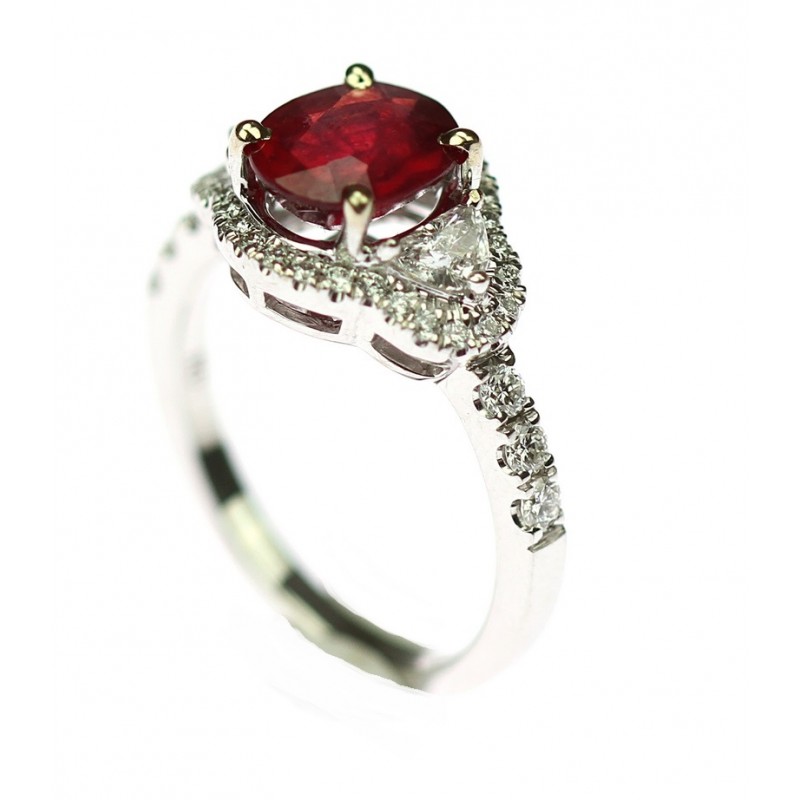
Who wouldn’t long for a beautiful, intensely red ruby, a stone that symbolises love and passion? The demand for rubies is exceptionally high, and current mining efforts cannot meet it. This is one of the reasons why their price can equal or even exceed that of diamonds.
One of the most renowned ruby deposits is the Mogok mine in Burma, which produced the magnificent Sunrise Ruby weighing 25.59 carats, sold at a Sotheby’s auction in 2015 for over $30 million.
Interestingly, some gemstones historically thought to be rubies were actually spinels (red) or sapphires (pink). The finest spinels are even more valuable than average rubies. Deep red spinels have confused many experts – such as the famous Black Prince’s Ruby, which is actually a spinel, found in the British crown jewels!
Unlike diamonds, we know that rubies owe their red colour primarily to chromium. The most valuable shade of ruby is called “pigeon blood.” If you are considering a suitable investment, rubies are certainly a worthy choice.
TIP
Don’t forget that for luxury items, it is recommended that your selected gemstone is certified by a respected gemological authority, such as GIA or HRD.
Rubellite
One of the most valuable types of exquisite tourmaline gemstones is the red-coloured rubellite. Its colour ranges from deep pink to purplish red, from which its name is derived: the Latin rubellus means pinkish or ruby-like. Interestingly, the largest rubellite crystal, called “Rocket,” measures an astounding 109 cm.
Garnet
The Czech Central Highlands, 16th century. That’s when and where rich garnet deposits were discovered, making the Czech Republic famous as the land of the most beautiful red garnets. During the early Middle Ages, garnets were used for decoration and often found in the eyes of animals, humans, and other figures.
The first garnet cutting workshop was established in Prague thanks to the initiative of Roman Emperor and King of Bohemia Rudolf II. Since then, garnets have gained worldwide renown, become part of our history, contributed to the development of jewellery making, and remain a prestigious export item.
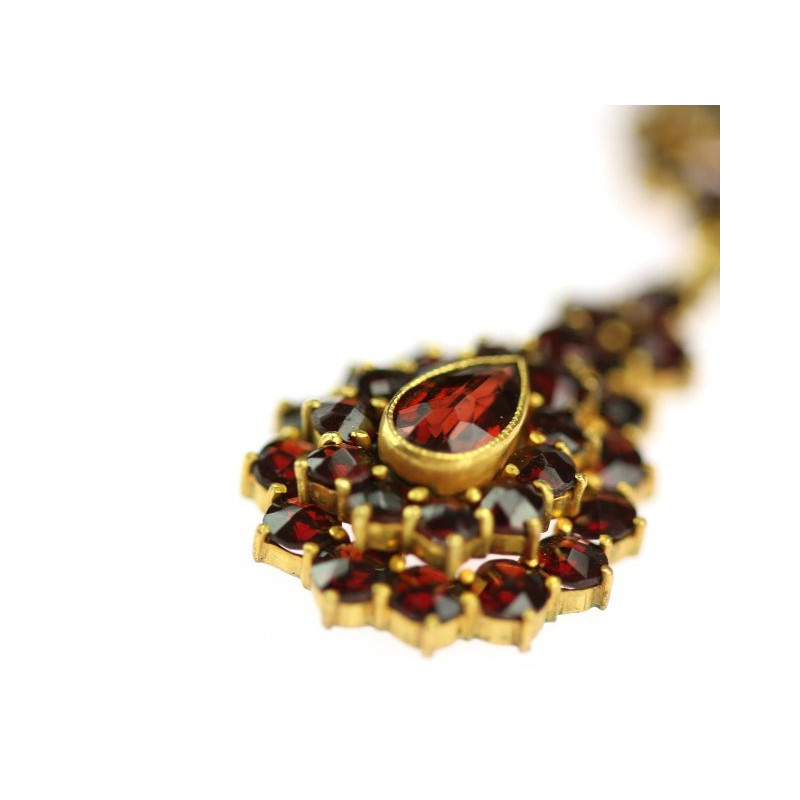
Garnet jewellery is crafted from gold, silver, or a special alloy called Tombak, which consists of copper (84–90%) and zinc (16–10%). If you come across jewellery where garnets are set in Tombak, you can usually be sure that the piece has a remarkable history.
Czech garnets look stunning in Art Nouveau jewellery, where they are most commonly found. Rings, earrings, brooches, pendants, charms, necklaces, brooches, but also watches, cases, or frames, imbue garnets with emotion and stories.
Garnets are long-time favourites and highly valued stones, with their prices remaining stable or gradually increasing over time – as does interest in them. For this reason, we can definitely recommend investing in antique garnet jewellery, whether it’s for joy and beauty or as an investment item.
Sea coral
Jewellery can also be adorned with corals, nicknamed the “diamonds of the sea.” While corals are not gemstones – they are fossils of certain species of small marine organisms – their beauty and value are nonetheless extraordinary.
Corals have been used to decorate jewellery since prehistoric times, and their popularity continues to this day. However, their harvesting is currently considered highly questionable from both environmental and ethical perspectives, meaning their availability will decrease in the future, while their prices will rise. If you are considering a coral jewellery piece, antique pieces are an excellent choice.
Have you decided which jewellery piece featuring red gemstones or coral will enhance your beauty?
