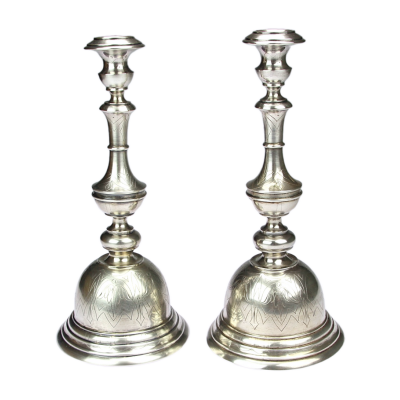

Silver Elegance
Author: Martin Cinolter
Finishing second can sometimes be a bit unpleasant, especially when only one can win. However, earning a silver medal at the Olympics is nothing to be ashamed of—quite the opposite. Silver graces not only the chests of outstanding athletes on the winners’ podium but also many a family’s cutlery drawer or display cabinet.
Let’s start with some dry yet brilliantly shining theory. The precious metal symbolised by the chemical symbol Ag (Argentum, or silver) has been known since ancient times. This metallic element probably has the best thermal and electrical conductivity. In nature, it is rarely found in its pure form, mostly appearing in compounds. The countries with the largest silver production are the USA, Canada, Mexico, Australia, and Peru. Historically, the most significant silver mining site in our region since the Middle Ages was Kutná Hora, whose wealth and fame were, at times, ensured by the extraction and refinement of silver and the minting of silver groschen in the royal mint. Silver coins were, however, already being minted in ancient Egypt.
Attributing magical properties to silver may not be the most important fact. But you’ve probably heard of a silver bullet, blessed with holy water, that can take out a vampire with one well-aimed shot. If the wooden stake doesn’t work, load up with silver! Joking aside, here’s another Transylvanian tidbit: vampires, as Bram Stoker taught us, don’t appear in mirrors. And do you know what makes a mirror a mirror? Its shiny surface, which is often made of silver due to its ideal optical reflectivity.
Another fascinating property of silver is its antibacterial qualities and significant effect on water quality. Drinking (water!) from silver cups is great for your health. Similarly, a silver salt cellar adds a finer taste to its contents. Setting aside silver’s technological uses, we must mention its irreplaceable function and aesthetic appeal in jewellery-making, as well as in artistic interior decorations and everyday items.
Silver cutlery passed down from a great-great-grandmother is preserved in families like… well, like family silver! It is only brought out for special occasions, along with its stories and the optimal methods of cleaning it. Silver is, after all, quite prone to tarnishing.
Silver also suits a Christmas table. It doesn’t have to be just cutlery or serving utensils. A salt cellar and pepper shaker, or a shiny tray holding glasses for a toast, add a festive touch! Evergreen foliage looks stunning in a silver vase, and tea served with sweets can be poured from a silver teapot. Silver was highly popular in the Empire, Biedermeier, and Art Nouveau (Secessionist) styles, as well as in other historical artistic movements.
Do you feel like your family is missing its silver? Start a tradition. My shop offers a wide range of silver items to enhance the atmosphere of festive dining or delight your loved ones as gifts. Come and see for yourself. After all, Silver Advent Sunday is approaching.
Martin Cinolter
Related products
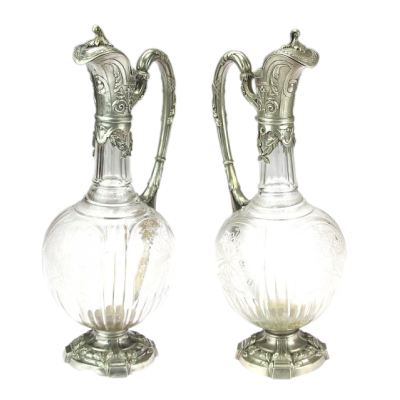
Pair silver of claret jugs - France 1860
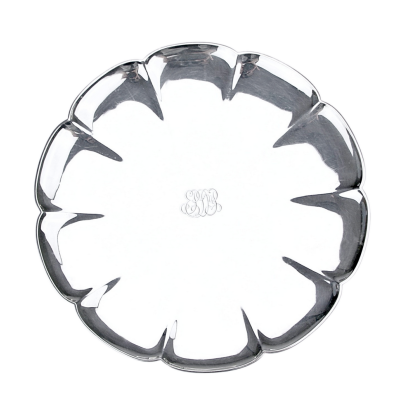
Silver plate - Tiffany & Co., between 1924-1947