
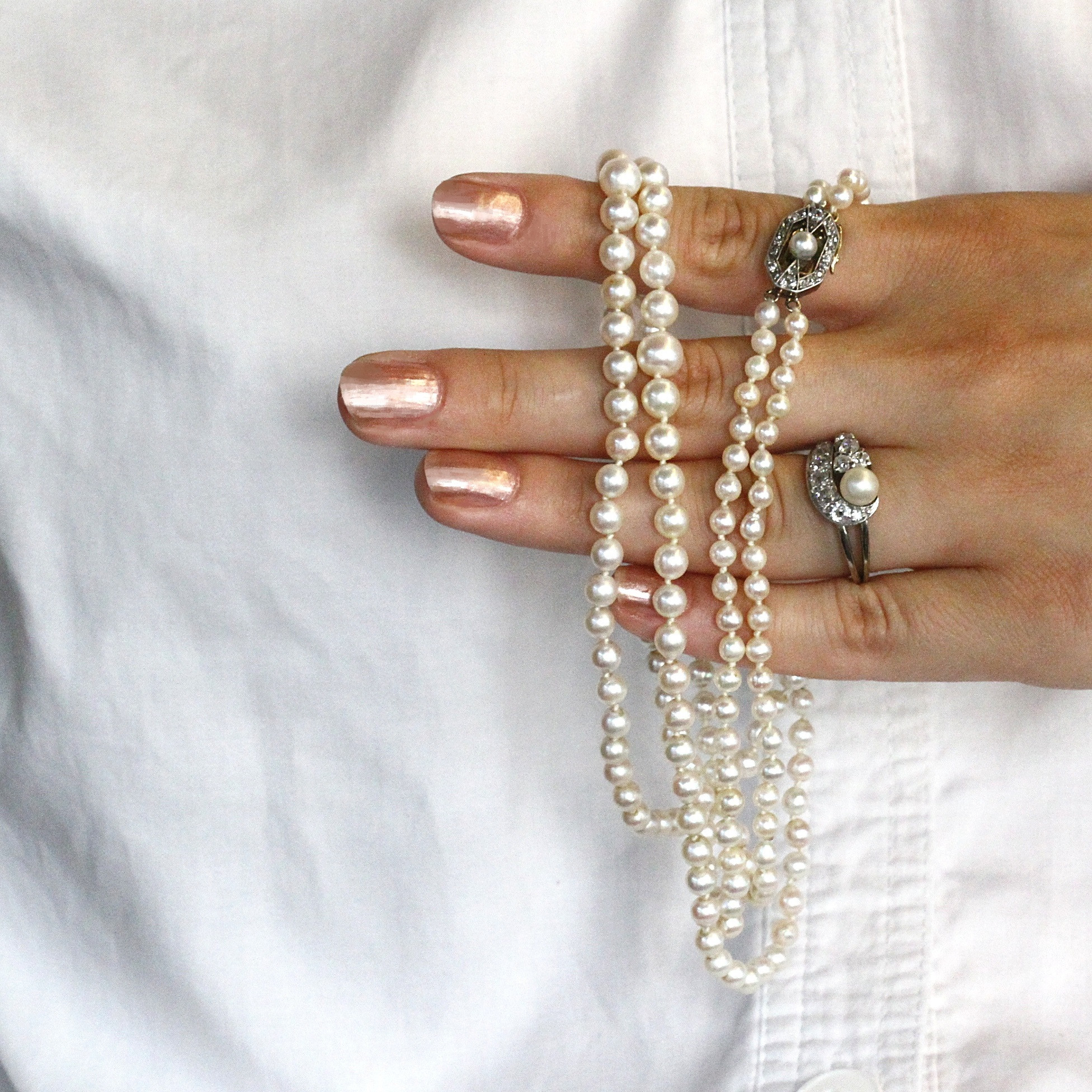
Interesting facts about pearls
Author: Martin Cinolter
From my tales about the fascinating pearls, I could write a novel! Complete with a romantic subplot, as pearls enhance every woman’s charm, add elegance, and attract admirers. They also have a historical role – once used as currency and prominently featured in royal regalia. When I want to describe someone’s uniqueness, I often call them a ‘pearl.’ However, not all pearls are created equal!
Before you decide whether to buy pearls as a necklace, earrings, ring, or bracelet, let me share some facts about this unique ‘fruit of the sea.’ Here’s a tale from Germany: a man ordered oysters for dinner and found a pearl inside. This little ‘pearl’ of a story is rare, though, and pearls – much like gold and precious stones – are best sourced from jewellers or antique shops.
Now, a little like being back in school: the basic classification of pearls, dear students, is freshwater and saltwater. Additionally, they can be either natural (oriental pearls) or cultured with human assistance. I’ll be upfront: pearls harvested from the ocean floor are significantly more expensive.
Freshwater pearls are often seen in antique jewellery as Czech jewellers frequently used them to complement other gemstones. I deliberately use the term ‘pearls’ because those found in rivers, lakes, and ponds are smaller than their oceanic counterparts. Freshwater pearls can also be cultured; for instance, China produces freshwater pearls that flood markets – including ours.
Saltwater pearls vary in size, offer a greater range of colours, and are generally more expensive, as I’ve mentioned. However, their colour isn’t always natural – even saltwater pearls can be cultured and dyed with aniline colours. Pearls grow in molluscs, usually taking one to three years. Major producers include Japan, Polynesia, and Australia. On the other hand, natural pearls are found in the Red Sea or the Persian Gulf. Pearls are assessed based on their shape, lustre, and colour. The colour spectrum ranges from white through shades of pink to black Tahitian pearls.
An untrained eye might not distinguish between natural and cultured pearls, but it can certainly identify a favourite piece of jewellery. The rest can be explained by a knowledgeable jeweller or antique expert. Who, for instance? Me! I’d be delighted to chat about pearls with you in person.
Martin Cinolter
