

Gemstones, Semi-precious stones or precious stones?
Author: Magdalena Kořínková
They are beautiful, colourful, shiny, and valuable. They have captivated us for thousands of years, and this is still true today. However, for a mineral to be classified as a gemstone, it must meet certain criteria. A gemstone must be visually appealing, have a high lustre, light refraction, attractive colour, and be clear or transparent. Sometimes meeting just one of these qualities is enough for a stone to be classified as a gemstone. This was not always the case. Let us delve into the history of semi-precious and precious stones.
In the past, only rare and very expensive stones were classified as gemstones, while more common stones were considered semi-precious. The distinction between gemstones and semi-precious stones first appeared in the mid-19th century.
Semi-Precious Stones
Until 1935, semi-precious stones referred to minerals that did not meet at least one of the criteria determining whether they would be classified as semi-precious or precious stones. These criteria included transparency, hardness, and suitability for cutting.
Examples of stones previously classified as semi-precious:
- quartz (various colours)
- garnet (red and green)
- turquoise
- topaz (yellow)
- jade (green and white)
- tourmaline (pink, green, and black)
- zircon (red, orange)
Gemstones
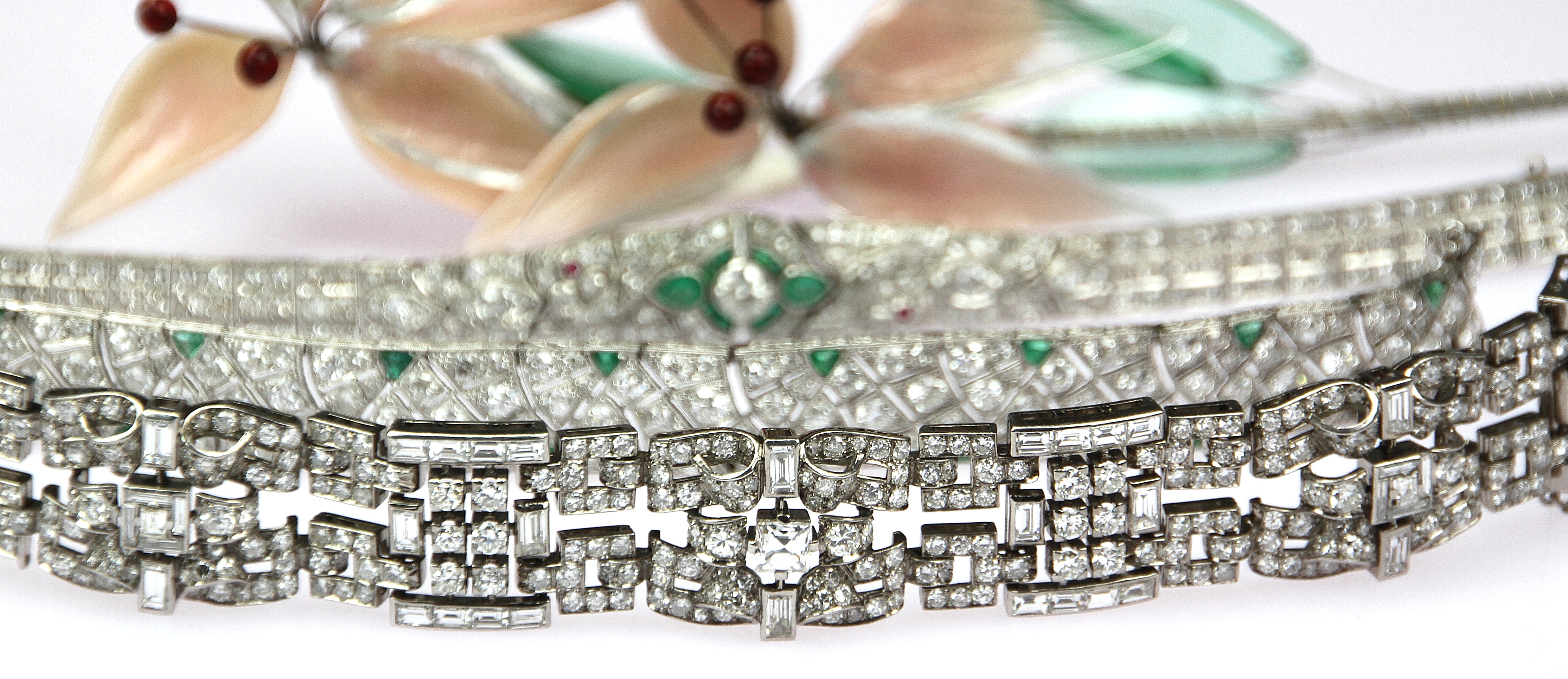
Until 1935, gemstones were considered to be minerals that were transparent, suitable for cutting, and had a hardness above 8 on the Mohs scale. Stones that met all the criteria except for an 8+ hardness were classified as semi-precious. Interestingly, by this standard, emerald would be a semi-precious stone as its hardness ranges from 7.5 to 8. Yet historically, emeralds are among the most valuable stones, alongside diamonds, sapphires, and rubies, forming the classic “top four” gemstones.
Precious Stones
In 1935, due to these inconsistencies, the term "semi-precious stones" was abolished with the adoption of a new official nomenclature by the international organisation BIBOA (Bureau International des Associations de Fabricants, Grossistes et Détaillants de Joaillerie, Bijouterie, Orfévrerie et Argenterie). The term “jewellery (precious) stones” was introduced. Since then, this term encompasses all minerals, even translucent and opaque ones, used in jewellery.
What qualifies as a precious stone? According to the International Jewellery Confederation (CIBJO), which also publishes lists of recognised gemstones, precious stones are “natural inorganic materials, excluding metals, used in jewellery and artistic creations.” This includes over 100 types of natural substances (minerals or rocks) that meet specific optical and physical properties (colour, transparency, lustre, shape, etc.), durability, and suitability for jewellery use, and, of course, value, which can be influenced by fashion trends and other factors.
Five Categories of Precious Stones
Precious stones can be classified into five categories:
- Main gemstones, such as diamond, corundum (sapphire, ruby), beryls (emerald, aquamarine), topaz, garnet, opal, tourmaline, etc.
- Secondary stones, including pearls, quartz and its varieties, amber, turquoise...
- General stones, such as chalcedony, agate, jade, feldspar...
- Rare stones, which are not commonly used for these purposes, like andalusite, anatase, rutile...
- Synthetic stones, artificially created
Gemstones can also be categorised by origin: mineral-based (diamonds, corundums, beryls, quartz, tourmaline, rubellite, etc.) and organic-based (amber, pearls, coral, shell, or ambergris).

How to Choose the right one?
When investing in a gemstone jewellery piece, antique jewellery is an excellent choice. These pieces were undoubtedly handcrafted, and their value is enhanced not only by the materials used but also by their high antique craftsmanship. Today, few can match the precision of the old master goldsmiths, not to mention the classic gem cuts.
Moreover, every antique jewellery piece is unique, ensuring you will not encounter anyone else wearing the same design. Its appeal is often heightened by the story behind it.
