
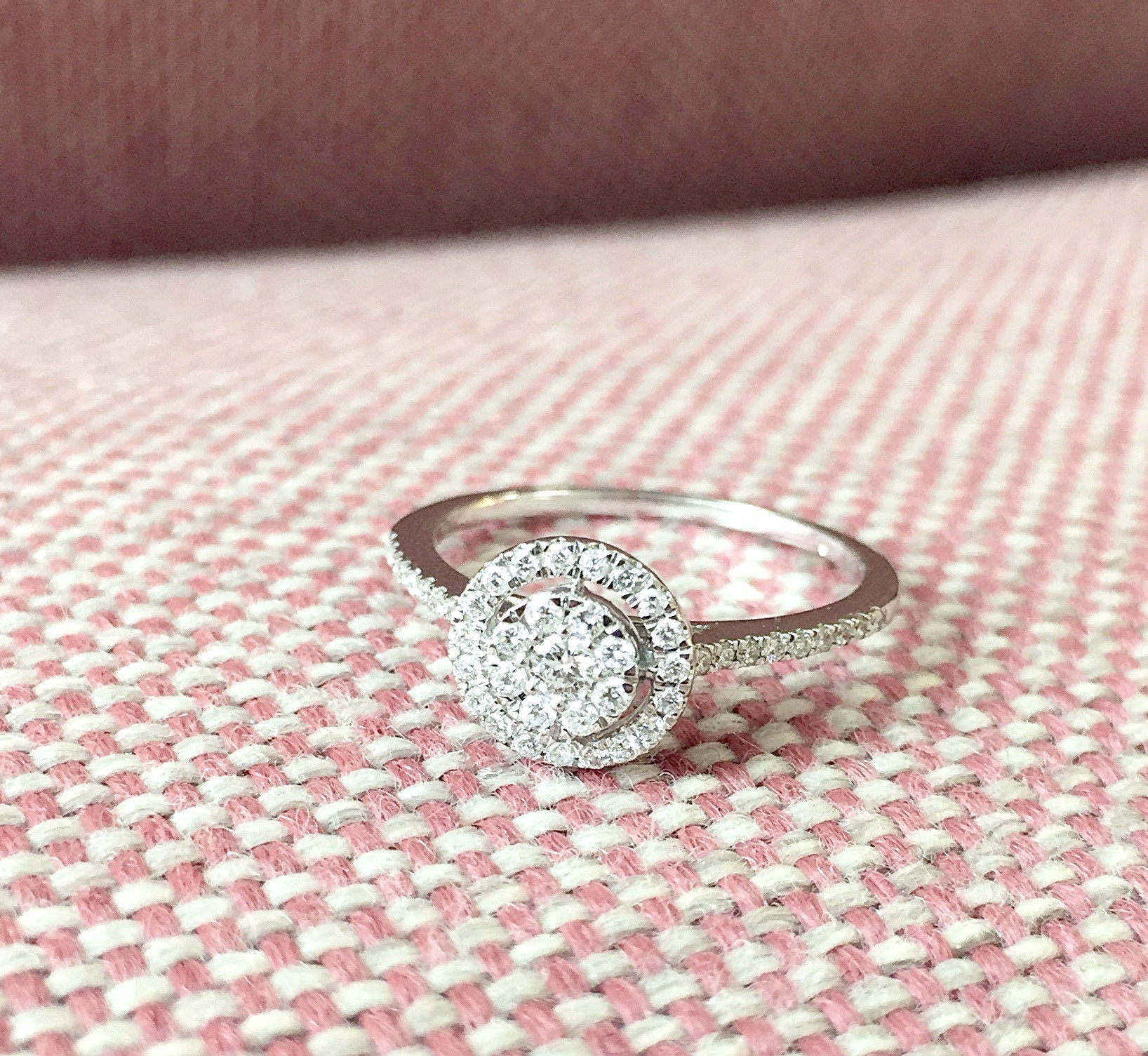
Propose with a unique ring
Author: Martin Cinolter
A scene you know from films—or perhaps even your own life: a man kneels, takes out a velvet box, opens it, and with the words “Will you marry me?” presents a sparkling diamond ring. This magical moment becomes even more enchanting if it’s an antique ring—a piece with its own story.
Let’s start by clearing up a common misunderstanding. What’s the difference between a diamond and a brilliant? A brilliant is a diamond cut into a specific shape with precise parameters featuring 57 facets. That’s the basic knowledge. What else have I got?
Brilliants are usually set in gold, but during the Art Deco period, platinum was widely used. You might be tempted to buy an Art Deco ring for its aesthetic and historical value. However, when selecting such treasures, you need to be extremely cautious. Auction houses and antique shops (those unscrupulous ones tarnishing the reputation of honest dealers) are rife with imitations of Art Deco jewellery, often featuring moissanite instead of a genuine brilliant. Moissanite lacks the hardness of a diamond and is lighter.
In a better scenario, an uninformed customer might purchase an antique ring where the diamond has been replaced with a modern cut. But more often, you’ll find entirely fake pieces cast in moulds, sold at prices that don’t reflect their inferior craftsmanship. An honest antique dealer will always disclose whether the piece is an original or a modified version and explain the differences between old and modern diamond cuts in detail. I hope I haven’t discouraged you from buying an antique ring!
If you decide to purchase an antique diamond ring, always request an expert appraisal—especially if it’s a high-value piece akin to the cost of a car, meant to grace your fiancée’s finger.
Perhaps you’re now feeling disheartened, thinking that an antique engagement ring is too expensive. Don’t worry! The beauty of diamond—or brilliant—jewellery lies in the variety of options, allowing you to find a piece that suits a modest budget. One such parameter is colour. There’s a 60% price difference between a top-grade D-coloured diamond and an H-coloured one. For the untrained eye, the difference is nearly imperceptible without comparison. If you’re unsure, we’ll gladly help you choose the perfect ring.
Martin Cinolter
