
Exploring the Charm of the Biedermeier Era
Author: Magdalena Kořínková
Today, let us look back to the German-speaking lands of the early 19th century, specifically the years 1815–1848. It was a period when people could finally breathe a sigh of relief that the Napoleonic Wars were over—only to find themselves facing the harsh repression of Metternich's absolutism. How did city dwellers of the time make life a bit more pleasant? They decorated their homes with porcelain, upholstered furniture, portraits, and still lifes; wore massive yet lightweight jewellery. They enjoyed sweet, melodious music and attended theatres to see patriotic and socially-driven plays. Let’s journey back to what we now call the Biedermeier era.
The Idyllic Family Hearth
After the long, brutal years of the Napoleonic Wars (1803–1815), residents of the devastated countryside in German-speaking lands migrated en masse to cities, hoping for better livelihoods and, above all, greater safety. This move often involved entire extended families, making the family itself the key social unit of the time. People, weary of politics, turned to family life marked by peace, comfort, and stability. They played music, contributed to hobby magazines, embroidered or painted—activities enjoyed both within the family and as part of hobby clubs.
They furnished their homes with functional furniture, porcelain and vases, which, thanks to the rise of factory production, became affordable even for the less wealthy. Simplicity and elegance were the guiding principles of the Biedermeier style.
What Does the Term Biedermeier Mean?
The term Biedermeier was first used in 1848 in the Munich magazine *Fliegende Blätter* (Flying Pages); until then, the era had been called the “bourgeois empire” period. The term Biedermeier was coined by German writer Joseph Victor von Scheffel, who wrote humorous poems about characters Mr. Biedermann and Mr. Bummelmayer. These fictional personas were combined into one: Gottlieb Biedermeier, the subject of Scheffel’s humorous verses. To understand the concept, note that bieder means “upright, honest, a good citizen, but also someone conservative, naive, perhaps even a little dull or petty-bourgeois.” And Meier is a common surname in German-speaking countries, like the English “Smith.” So, the name Gottlieb Biedermeier translates roughly as “Good Citizen Smith.” By creating this character, von Scheffel poked fun at the simplicity and small-town mentality of many residents who often migrated from rural areas and sought no interests beyond their immediate concerns.
Beauty Lies in Simplicity
Because family and home were central, the Biedermeier style is noted for its applied arts. Portable serving tables, display cabinets, precursors to modern sofas, the famous “Thonet” bentwood chairs, and glass or porcelain sets, jars, cups, goblets, and carafes served both decorative and practical functions.
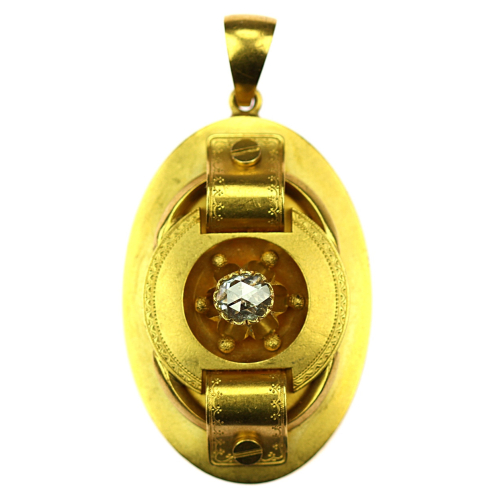
Jewellery from the second half of the 19th century was large, ornate, and sturdy, yet also functional. Often hollowed out and lightweight, pieces could hold keepsakes like tiny photos or locks of hair.
Techniques included guilloché (delicate linear engravings), filigree (intricate lines or curls), and enamelling. Crosses, hollow lockets, lockets, and lavish necklaces adorned with pearls, garnets, or other gemstones were common. “Demi parure” sets, jewellery intended to be worn together—typically earrings, brooches, and necklaces, with fully coordinated sets including bracelets and a headband—were fashionable. Memorial rings and hefty bracelets were also popular.
Does the Biedermeier Style Speak to You?
If you find the Biedermeier lifestyle and artistic style appealing, you can select from a wide range of beautiful Biedermeier antiques at our shop. Relax in your favourite armchair with a book, listen to the ticking of a mantel clock and Schubert’s melodies, and enjoy your favourite drink from an antique carafe or porcelain, and let yourself be transported to a time when the peace of home filled the soul.
Related products

P. A. Jeanniot - Lake and mountain landscape

Biedermeier salt and pepper cellars - Josephine Glasswork
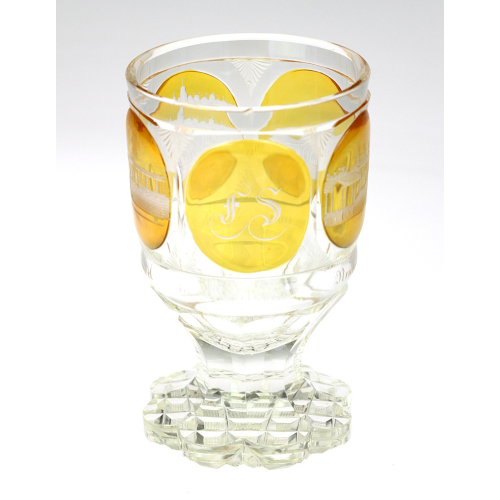
Spa cup, Carlsbad (1840)
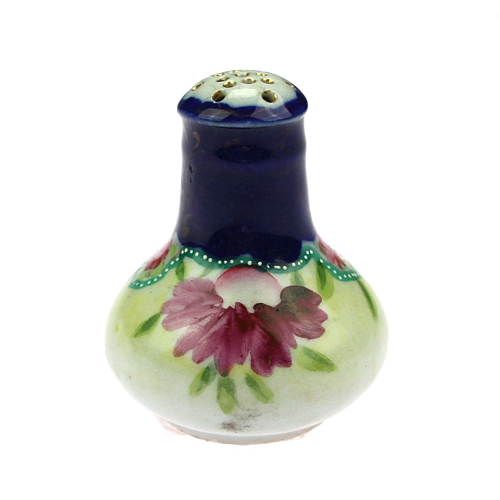
Biedermeier porcelain sugar bowl